03.19.13

Pause for Thought 19 March

Posted in Pause for thought at 5:14 pm by Krishna Dharma

I delivered this script today on BBC Radio 2. The theme was ‘Water’ as this week it is World Water Day.

Water and life in all its forms are inseparable. When we look on other planets for signs of life it’s the first thing we try to detect. Although we can last quite a long time without food we humans will die in a week without fluids. In the case of cups of tea it might be only a few hours.

But despite its importance we can’t really create water, certainly not on the scale it is needed. Massive are required explosions to make just a small quantity. When the ill fated Hindenburg –a hydrogen balloon—exploded, a good few gallons were made, but we would hardly want to replicate that very often. So far our attempts to manufacture water have not met with great success and we now face a growing global crisis of not having enough of it. Africa, Asia, Australia, even America and Europe, have all been suffering drought conditions. The world water situation is becoming so critical that wars may well be fought over it.

In truth we depend on a higher power. Water is a natural resource we can only hope is bestowed upon us through sufficient rainfall, over which we have no control. We can only make things worse it seems. Although our technology cannot create water, it has managed to seriously deplete many freshwater sources through widespread pollution and the immense amounts used in manufacturing processes we could probably live quite comfortably without.

This doesn’t have to happen. In the Bhagavad-gita, Krishna tells us that all our resources come as a result of divine grace, and that we can have abundance in all areas if we simply abide by divine direction. This is the bigger picture. That everything ultimately belongs to God and we are only temporary custodians of his property. When we treat the world with reckless abandon in pursuit of immediate profit we inevitably create calamity. Maybe if we used God’s gifts in a godly way we could avert disaster before it is too late.

01.25.12

Who am I?

Posted in Pause for thought at 1:48 pm by Krishna Dharma

This is the last Pause for Thought in my current series, aired on Tuesday last on BBC Radio 2

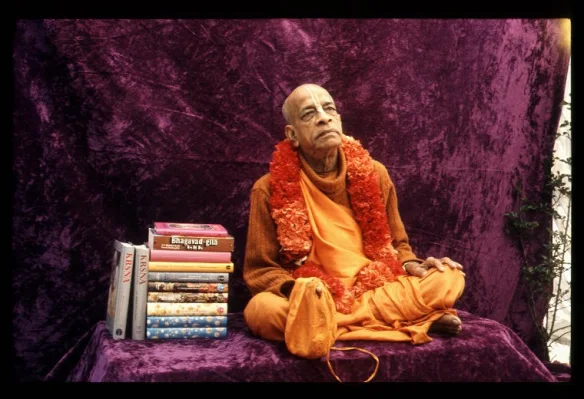
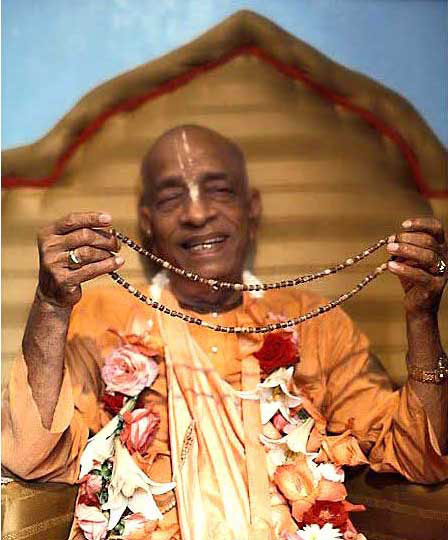
My spiritual master Srila Prabhupada was once asked to speak to a group of school children. “Who is the most intelligent student here?” he asked. A sea of modest blank faces stared back but eventually one child was thrust forward by his obliging friends and Prabhupada said to him, “Please point to your head.”

The bemused boy, expecting a sterner examination of his intellectual powers, duly complied. His next challenge was to point to his arm, followed by his leg, stomach and chest. Having sailed through all these tests he was finally asked by Prabhupada to point to his self. The boy raised his finger and turned it inwards but then hesitated. Where indeed was the self?

It was perhaps no surprise that the student was perplexed. The puzzle of understanding who we are has vexed the greatest minds for millennia. Even the avowed materialist Thomas Huxley, known as ‘Darwin’s bulldog’ for his fierce advocacy of evolution, once said, “It seems to me pretty plain that there is a third thing in the universe, to wit, consciousness, which I cannot see to be matter or force or any conceivable modification of either.”

Well, at least there I would concur with the good Mr Huxley. So would Krishna in the Bhagavad-gita where he explains that the self or consciousness is different from the body it inhabits. In fact all of us regularly refer to that difference. “My body, my mind”, – there is a duality, a difference between the seer and the seen. Plainly the young lad taking Prabhupada’s test had realised this as his finger hovered over his chest and he understood that it was not really him, the actual person.

Krishna helps us directly perceive this by describing how the body constantly changes but the self is still the same. We all see it happening. I was looking wistfully at a photo of myself at the age of twenty the other day, slim, fit and bursting with life. Where is that body now? Certainly not occupied by me today, as the mirror mercilessly confirms when I dare glance at it. But I am certainly the same person that I was then. Only the vehicle has changed, not the driver.

This is the first point of the spiritual teachings in the Gita. Know thyself. You are not the body you inhabit and can never become happy merely by bodily enjoyment. That’s a lesson I’d like to see taught in more schools.

01.19.12

Real religion means love

Posted in Pause for thought at 5:50 am by Krishna Dharma

Here’s my Pause for Thought that was broadcast on 17 Jan on BBC Radio 2

Wandering about in my religious robes the other day, I happened to pop into a grocer and the assistant, plainly of another faith, took one look at me and asserted, “Your book is wrong.” Somewhat taken aback I assured him I had not come to discuss the merits of my book and he calmed down, but continued to eye me suspiciously.

I had to laugh when I left the shop, but disagreements between religions are of course not always so funny. How many times do we hear the argument that religion causes more wars than anything else? Personally though I take issue with that claim. Fair enough, we do see more than enough conflicts over whose book is right, and even some over what is the right interpretation of the same book, but is this really about religion?

The actual meaning of the word from the original Latin is to link with God. This too is how the Bhagavad-gita defines it, as the means by which one can know and ultimately love God. So really when properly practiced religion should be about love not hate.

Hatred comes from somewhere else, from seeing others as different and somehow inferior to us. It might attach itself to a religious pretext, but it can just as easily be attached to race, nationality, politics or football. It springs from egoistic pride and spiritual practice is meant to destroy that, to take us to the point of seeing ourselves and all others as parts of the same Supreme Spirit. When through proper religious practice our love for God awakens then our love for all of God’s creation will also manifest.

If we hate in the name of religion we have surely missed the point. And it is a point espoused by virtually all faiths, this life is not the all-in-all, we are meant for eternal service to God, and all of us are his children, all equal in his eyes. There may be some differences in practice or other externals, but these are really only details. Why argue over that?

So during this week of World Religion Day we should try to remember the common essence of religion, the attainment of divine love, and if we must hate then let us hate the ignorance that causes us to fight over misunderstandings and trifles.

01.12.12

Better than cheese on toast

Posted in Pause for thought at 6:51 am by Krishna Dharma

This is my ‘Pause for Thought’ broadcast on Tuesday morning on BBC Radio 2

I didn’t make any new year resolutions, but I have been called upon recently to make some difficult lifestyle changes. Bouts of sinusitis have obliged me, under strict dietary advisement, to give up a range of foods including dairy products, wheat and various other items which had previously formed an integral part of my daily fare. Thus it is that I must now forgo the delights of cheese on toast, and indeed even toast itself. I wonder how long I can last.

Giving up things we like is not easy. There has to be a compelling reason, like not being able to breathe for example, which just about works for me. Or perhaps we will make some sacrifice now with the aim of achieving something superior in future. We operate on that principle quite often in life. We are prepared to undergo some immediate difficulty so that we can enjoy a later result. For example we might punish ourselves in the gym, driven on by a vision of that svelte and fit form we long for. As they say, no pain no gain.

This is good intelligence, to be proactive, delay gratification, keep in mind the future and see what will produce our enduring happiness rather than our immediate pleasure, which may actually result in longer term suffering.

This too is the principle of spiritual life, to be ultimately proactive and recognise what will secure our permanent happiness. Thankfully though, although spiritual practice leads to maximum gain, it does not require maximum pain. The Bhagavad-gita describes a path that is “fully joyful”, but like everything else there is a price to pay and some resolve is required. For example, instead of flopping down to read the paper or watch TV at the end of a hard day, which is a natural inclination, I take the time to hear and meditate upon divine instructions from scriptures like the Gita.

It requires some determination, for sure. The mind would rather indulge in material gratification, but I know that won’t make me happy. For me human life is meant for achieving the highest state of absolute happiness, and for that I am prepared to sacrifice a little bit of enjoyment now. We can achieve something unimaginably greater than that. The Gita says, “One who experiences the joy of self realisation feels there is no greater attainment and desires nothing more.” I reckon that beats even cheese on toast.

Krishna Dharma, Hare Krishna Priest and Author

12.14.11

Stand up to your bullies

Posted in Pause for thought at 11:21 am by Krishna Dharma

This is the second Pause for Thought in my current series, broadcast yesterday morning on BBC Radio 2

Courage is a positive quality, but it might sometimes require judicious application. I remember at school seeing a friend being bullied by an older child. “Pick on someone your own size,” I blurted out. The bully looked at me, marginally bigger than my friend. “Fair enough”, he said with a smile and proceeded to turn his pugnacious attentions towards me.

A little painful but looking back I don’t regret it. Courage means standing up for what we believe to be right, even in the face of difficult consequences. I might have ignored the age old military wisdom to not challenge a superior foe, but I don’t think I was wrong to take a stand. I just needed reinforcements.

Since then I have had to take many more stands. Not of a physical nature thankfully, but I have often been called on to dig deep inside myself and find moral courage to make the choices I believed were right. As a young man I became a Hare Krishna monk, forswearing the lifestyle choices of all my peers, my family members and indeed myself up until that point. It was a radical step. Taking vows to give up intoxication, illicit sex, gambling and eating meat tends to separate you from the crowd a bit.

And over the years it has led to quite a few more assaults from bullies. Not of the school playground variety though. This has been an inner fight, about being true to myself. That has been the real challenge demanding my courage; having the strength to say no to my pugnacious mind and senses which constantly try to drag me away from the spiritual path. But I’ve been that way before and I know it is a dead end.

I believe real happiness comes when I take the harder choice and follow the guidance of God. That pleases him and when he is satisfied he showers blessings and we experience a sense of inner fulfillment. The flickering enjoyment of bodily indulgence can’t compare to that, in my experience. And even when we lose a battle, as we sometimes will, merely the attempt to fight the good fight pleases God and he reciprocates from within us. So I shall keep praying for the moral courage to make the right choices. I’ve had quite enough of being bullied by my insatiable senses.

12.06.11

The light of knowledge

Posted in Pause for thought at 6:22 am by Krishna Dharma

I have just started another series of Pause for Thought on BBC Radio 2. The first was on the theme of Light.

I am a bit of a light fiend myself, always leaving them on all over the house, much to the annoyance of my cost conscious wife. We’re not made of money, she reminds me, as I sit bathed in the glow of every bulb in the room.

She’s right of course, as always, we shouldn’t waste energy, but we do need light. We can’t do much in pitch black darkness, except maybe sleep or grope around for a torch. Darkness is not particularly pleasant, invoking fear in many of us as we don’t know what might be about to spring out of the gloom and suddenly assail us. Really it is a state of ignorance and in fact the Bhagavad-gita in its first instruction exhorts us to come out of the darkness and into the light, out of the cloud of unknowing and into the effulgence of pure knowledge.

Being in darkness means suffering. Stumbling around sightless we are likely to hit hard obstacles, and that hurts. It is the same as ignorance. Not being able to see what to do and what not to do, what is right and what is wrong, we are likely to act foolishly and experience painful results. We may think that a surfeit of sensual pleasures will lead to happiness, but we soon discover that there is a hard price to pay, on our bodies, our minds, on others and on our environment.

Therefore God instructs us to seek the light of divine knowledge, of knowing him and the path to pain free pleasure he wants us to enjoy. In the Bhagavad-gita Krishna says, “God is light, ignorance is darkness, where there is one there cannot be the other.”

Basking in the brilliant light of spiritual truth we become free of all suffering. We see the obstacles to our real happiness, recognise who we truly are and where we belong. We want knowledge, to know what is going on and what is what. News and information channels flood the media these days to satisfy that desire. But ultimately we need the illumination of complete knowledge, of spiritual enlightenment, a state of total awareness that reveals everything we seek but struggle to find in a world of darkness.

So let’s try to leave the lamp of Divine guidance always burning. I know my wife won’t mind that.

09.08.11

Pause for Thought

Posted in Pause for thought at 3:34 pm by Krishna Dharma

These were delivered over the last 3 weeks on BBC Radio 2

Week 34 – Music

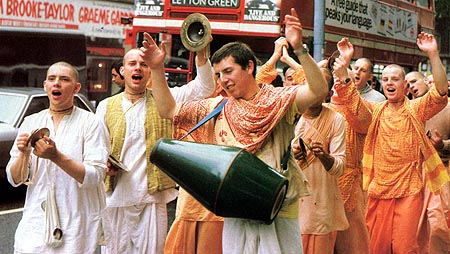
This weekend I am hoping to make it to the Notting Hill Carnival, helping a few friends with their environmentally friendly ox-powered float, and adding my voice to the general din by chanting a few ancient Sanskrit mantras. The carnival is a musical affair so we will bring our instruments and try to chant as harmoniously as possible, which is more than I would say for a lot of the music I hear these days.

I guess that’s always the case though, like everything else music moves on and leaves its lovers behind. The raucous racket blasting out of our kids’ rooms today has us reaching for the ear plugs, while the sweet and melodious sounds which we enjoyed in our youth are generally viewed by them as old fashioned rubbish.

Oh well, each to their own I suppose, but it is a rare person who does not enjoy some sort of music. As the poet said, music has charms to soothe the savage breast. The composer Thomas Beecham put it even more eloquently when he said that the function of music is to release us from the tyranny of conscious thought. I would second that, but with a certain proviso, that it be a part of one’s spiritual practises.

For me music is an intrinsic element of my spiritual life. In Hinduism and particularly the Krishna faith, the process of kirtan, congregational glorification of God, is a key practise, and should you visit a Krishna temple you will very likely encounter groups of worshippers engaged in enthusiastic singing, and quite often dancing too. Music serves to attract us to the prayers and spiritual chants, but it is these that actually free the mind from tyranny.

In fact the word mantra means just that – ‘mind freeing’ – particularly from those thoughts which keep us bound up within this world. The mind is described in my scriptures as the vehicle carrying the soul, and if it is absorbed in materialistic thought it will oblige us to remain within the material or mortal realm. Only when the mind is absorbed in the divine can the soul be liberated and returned to its spiritual position. This is generally known as meditation and the easiest way to do this is chanting.

That’s where the mantras come in. These generally consist of God’s names which are divine sound vibrations. Therefore simply by joining in with the singing we effectively meditate on the Supreme and move towards liberation. It doesn’t matter what name we chant, after all God has many names, but by this simple process we can quickly free ourselves from all the stress and anxiety of life and achieve the highest happiness.

Week 35 – Lessons learned

As Ramadan draws to a close our Muslim friends will no doubt be reflecting on the lessons they have learned from their religious observances over the last month. Challenging the urges of the senses and mind always teaches me lessons. The first thing I notice is how powerful these urges are. It is like being swept along in a boat by a fast current. You don’t notice the movement or the force that moves you, until you decide to row against it. In a similar way we normally let ourselves be carried by our sensual and mental desires, submitting to them as far as we can in our quest for enjoyment. We hardly notice how they dictate our lives until we try to control them. Then they fight back with a force we never realised they possessed

My spiritual master once said that taking to spiritual life means declaring war on the force of illusion, on the urge to indulge the body and mind in material pursuits. It is illusion because we are spiritual beings, entirely separate from matter and meant to enjoy a superior spiritual happiness – but that means controlling and ultimately ending our attempts to exploit and enjoy this world.

Tough prospect perhaps, but surely we can see how such exploitation – certainly when taken to excess – leads to problems. This is a lesson we tend to learn the hard way as we reap the results. For example eating or drinking to excess leads to pain. Excessive or in other words illicit sex is fraught with trouble. Any of our senses can afford us only so much ephemeral pleasure and then we become bored or worse. On a larger scale our profligate rape of the earth in pursuit of increased consumption has produced numerous well documented calamities.

All of this should hopefully lead to us learning a larger lesson. We want unlimited enjoyment but neither our bodies nor our available resources will allow it. We need to look in a different direction. This is the direction given by God and found in all faiths and scriptures. Turn from matter, or Mammon, or Maya as I would call it, towards spirit or God. He is the unlimited Supreme and in his association we can enjoy the supreme pleasure we seek.

It is not that easy of course. I know I am still learning that lesson after so many years of trying. Our desire for sensual indulgence runs deep and as I began by saying it presents us with a formidable obstacle. The only answer is prayer and doing our best to follow the Lord’s directions. Even the most powerful foe can be conquered with his help, and the biggest enemies we face are our own unbridled senses.

Week 36 – Back to Reality

At last the holidays are over and it is back to reality time for the kids as a new school year begins. Discussing this happy event with my teenage daughter last week and attempting to instil in her an appreciation for the value of a good education, I was told, “Well Dad, the reality is I hate school. Simple.”

There’s no arguing with that and it’s probably true for many of us, that we grapple with the realities of our day to day lives. We do live in quite stressful times it seems. According to the Mental Health Foundation 1 in 4 British adults experience at least one diagnosable mental health problem in any one year, and 1 in 6 experiences this at any given time.

Reality can be hard to face at times but according to the ancient sages of India the root cause of anxiety is to not understand what reality really is – in other words to accept the unreal as real. The Bhagavad-Gita defines reality as being that which has no termination, and conversely the unreal as that which has no permanence. For example ourselves – in reality we are said to be eternal spirit souls. The soul’s temporary covering in the shape of our bodies is merely a passing combination of elements. They take the shape of a body for a short time and then disintegrate, again to reassemble into another form in due course of time. But the soul, the actual person, endures this change and continues to live, accepting another form.

All material phenomena are in a state of constant flux, forever moving from one state to another and thus the forms of this world have no substantial reality. As eternal beings we are not happy with this state of affairs. We therefore strive for security, for some sort of permanence. However, it is a losing battle. All things must pass, as George Harrison musically pronounced. Our homes, relationships and everything we possess, including our very bodies, will be taken away by the force of time. Therefore we are anxious on account of struggling vainly to avert this inevitability.

That anxiety can be entirely dissipated when we focus on true reality, on our spiritual self and our undying relationship with God. This cannot be taken away at any time. When we see the world and everything within it, including ourselves, as belonging to the Supreme, in the ultimate analysis as his energy, then we become situated on the platform of eternity, where we belong. The problems of life may not vanish, but they will be cut down to size, seen in their proper perspective against the reality of our immortal spiritual existence. That’s the only reality I can face.

08.20.11

Pause for Thought

Posted in Pause for thought at 2:54 pm by Krishna Dharma

These were delivered by me on BBC Radio 2 over the last three weeks on specific themes which they requested. There will be more of these from myself in the next three weeks also. (Thursdays at 5.45)

Week 31 - Fasting

This week marks the beginning of Ramadan and Muslims all over the world will begin observing their sacred month of fasting. I have to admire them for this as I know how difficult it can be, having myself to observe many such fast days throughout the year.

Of course, I don’t have to fast, and in our society where food is abundant nor does anyone else, but it is a choice made by many devout followers in all religions for the purpose of bringing one closer to the divine. By forgoing bodily pleasure for the satisfaction of God, one can attract his grace, leading to spiritual progress.

But it can be difficult. An American friend told me how in his youth he had attempted a forty day fast. Convinced that extreme bodily privation would lead to deep mystical experiences he went into the Californian desert and proceeded to live on only water. However, after a few days in the punishing heat he was overcome by intolerable cravings and headed back to the city where, as he put it, he ‘grossed out’ on ice cream. He tried again a couple of times but with pretty much the same result. Needless to say he did not attain any spiritual realisations beyond that bodily desires are mighty forces indeed.

Although his was a failed experiment, I think he was on the right track and just needed some proper guidance. When fasting is done in accordance with scriptural direction, as an offering to the Supreme, one reaches higher levels of consciousness. The Bhagavad-gita explains that the first point of spiritual understanding is to recognise how the soul is different from the material body it inhabits. This is a difficult concept to grasp while we are fully absorbed in indulging our bodily demands, seeking pleasure through satisfying our senses. As long as our consciousness is focused outwards on the objects of bodily pleasure we cannot go within and discover our deeper spiritual essence. It is therefore recommended that the senses are controlled, and fasting really helps.

From my own faith perspective the aim is to more and more reduce bodily demands and increase one’s absorption in the divine. This results in a far higher happiness than can be found through any sensual pleasure. Great saints in our tradition and indeed in all faiths reach levels where they are so rapt in spiritual ecstasy that they entirely forget the wants of their bodies.

But, as my friend discovered, this takes time and gradual practice, and ultimately God’s grace. Through our penance and our prayer we please him, and when he is pleased with us we will find the strength to withstand bodily demands and discover levels of joy far beyond anything afforded through bodily senses. And thankfully we don’t have to go to any wilderness.

Week 32 - Escape

School holidays are here and for our kids that means six weeks of glorious escape, although of course their parents might take a rather different view. It’s not just children of course, all of us need to escape from time to time and towards that end we have, as well as holidays, books, films and other such diversions in which we like to lose ourselves.

Too much escape though is not seen as good. Then one is called an escapist, which tends to be a pejorative, a head in the clouds kind of person who can’t face reality. When I first started following the Krishna faith I sometimes found myself confronted with this accusation. At first I would argue but now I would tend to agree. I am indeed trying to escape from the realities of this world, but what exactly are they?

I am not thinking of work, managing a household, raising a family and all that, because I have certainly not escaped that, but rather I mean the intrinsic reality of our human condition. That means the miseries of disease, anxiety, old age and death. For most of us these are seen as inevitabilities, but according to the Bhagavad-Gita everyone can escape from them by spiritual practise and we are exhorted to make that our prime endeavour in life.

In many ways we already try. Science strenuously seeks solutions to the problems we face, hoping to one day eradicate them. Huge resources go into research that aims to cure or eliminate disease, for example. Even old age and death – some scientists believe that if they can just identify the gene that makes us grow old then they will be able to stop the aging the process. I don’t think I will hold my breath on that one.

We have to admit that our natural condition in this world is rather an awkward one. We constantly endeavour to adjust our environment in order to make it more comfortable, more secure, safe and peaceful. We have to work hard for this or soon everything would descend into disorder and madness.

But along with this work we should not neglect our spiritual side which ultimately offers the only real escape to our problems. By turning to God and realising our true nature as his eternal blissful parts we transcend this troubled world. We belong with God and somehow made the mistake of turning away from him to come here. Accepting this truth, that this mortal sphere is a place of misery, can be difficult when we so much want to enjoy ourselves here, but for me head in the clouds has always been better than head in the sand.

Week 33 - Opportunities

Nerves will be jangling up and down the country this morning as A-level students anticipate their results. Today is the big day - the fruits of two long, hard years of work and hopefully the doors to that desired university place swinging open. And for those Dads like me who sought to incentivise their leisure-focused offspring by dangling the time honoured carrot of hard cash in front of them, it might be time to dig deep.

What we really want though is for our children to recognise and seize the opportunity that a good education can provide. We want them to be all they can be and above all to be happy. Becoming qualified for a decent career that they actually enjoy is a good start and missing that opportunity would certainly be a shame.

However, everyone has in their life a far greater opportunity than any material education can offer, to achieve something unimaginably more wonderful. To understand this we first need to understand the real point of education. Why do we want to gain knowledge? Maybe to get that plum job or whatever, but really what we are trying to do is avoid difficulty. Knowledge equips us with the ability to cope with life, to deal with its many challenges and carve out what we hope will be some sort of comfortable existence. Without any education or knowledge we will be in trouble. Some of you may remember one of the first AIDS campaigns years ago that led with the slogan ‘don’t die of ignorance.’ Lack of knowledge can have a deadly outcome.

The Bhagavad-Gita tells us that perfect knowledge leads to perfect happiness and urges us to seek that immediately. What am I? Why am I in this world? Why is their misery? Only human life affords us the opportunity to ask these questions and find out the answers. Opportunities for physical and mental enjoyment are there in all species of life, indeed many animals have more facility for material enjoyment than us, but in human life alone can we seek and understand spiritual truths.

To miss this opportunity is compared to a poverty stricken person who has been left a vast fortune in a will but never finds about it. The highest type of worldly enjoyment is said to be like a drop of water next to the ocean when compared to the ecstasy experienced when we realise our spiritual nature and our relationship with God. In the words of the Gita, “having gained this one feels there is no greater gain and is fully satisfied, being plunged into a sea of happiness that has no shore.” And for this no A-levels or degree are required. It is available to us all.

05.04.07

Sport and the spiritual

Posted in Pause for thought at 5:11 am by Krishna Dharma

Pause for Thought. 3 May 2007

After last week’s struggle on the tube I decided to walk from Euston today Terry. Not a bad idea at my age anyway, keep fit and all that. I do try to get a bit of regular exercise so I tend to walk whenever possible, because I am not much of a sportsman. Sports sessions at school would generally find me skulking behind the changing rooms, trying to avoid the PE teacher, a hulking fellow who tended to show his disapproval of less enthusiastic students by means of bellowing directly into the ear of the offending subject. I think he managed to put me off for life.

But sport is obviously good for us. Many of us could perhaps do with a bit more sporty action in our lives, although there’s usually no problem when it comes to watching it. Now the football season is drawing to a close our attention will switch largely to cricket, which I have to say is not really a sport that I personally find that riveting. I think it was George Bernard Shaw who said, “The English are not a spiritual people, so they invented cricket to give them some idea of eternity.”

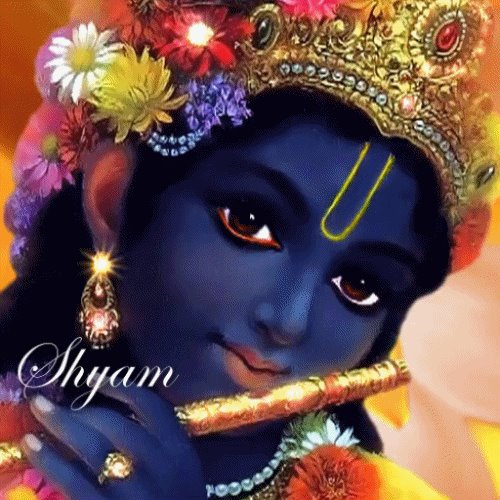
I don’t know about that, Terry, but I do think it is possible to get an understanding of the spiritual from seeing our fascination with sport. Vedic teachings say that God himself eternally engages in many different sporting pastimes. Not football or cricket, as such, but it is said that in his most intimate form he appears always as a sporting youth, enjoying all kinds of loving exchanges and games with his devotees. This is where we all belong, forever enjoying ourselves with the Lord, and hence our attraction for playing games in this world.

Our liking for sports gives us another insight into the spiritual, according to the Vedas. Just what is it that we find so attractive? When for example we see Wayne Rooney score a brilliant goal from an impossible angle, we admire his skill, and the Bhagavad-gita says that this is a manifestation of God. It is not that Wayne Rooney is himself God, of course, although some may argue the point, but the Lord says in the Gita that he is the “ability in man”. The talent of world class sportsmen is something you either have or you don’t; it is a divine gift, and by seeing it we can be reminded of the Lord.

Indeed the attractive principle in anything is ultimately an exhibition of the divine. The very name for God in Sanskrit is Krishna, which means all-attractive. Anything in this world we find striking or beautiful shows us but a small spark of the beauty and greatness of God, its original cause.

So Terry, in a sporting mood, and meditating on the eternal sports of Krishna, I shall now stride off back to Euston.

04.26.07

Life is a journey

Posted in Pause for thought at 9:03 pm by Krishna Dharma

Pause for Thought with Terry Wogan. 26/04/2007

Getting here was a bit of a struggle this morning Terry. It’s madness on the underground. There were long queues just to get into the station at Euston. Once I had managed that and finally reached the platform, I stood and watched a succession of trains come and go with no possibility of getting aboard. At last I got on and was able to make the very close acquaintance of my fellow travelers, studying the finer points of their physiognomy from a distance of two or three inches.

Commuting is a stressful business and people find different ways to cope. I don’t know if you saw the recent study by researchers from Warwick University, Terry, but they listed nine different ways of dealing with the daily grind to work, among which was “self generated audio coping”, which basically means singing to oneself. Thankfully no one near me was doing that this morning. The researchers also suggested admiring attractive fellow passengers, “reflecting positively on the day’s events” and praying. And if all else fails, going for counseling.

It’s not just commuting when we have to travel, of course. Life today is full of journeys, it seems. Most of us could hardly survive without our cars; usually two or even three of them are required for a family these days. But in the midst of all this moving around we should not forget that life itself is a journey. All of us are travelling continuously through time, observing so many changes as we go. In fact the Bhagavad Gita tells us that by simply realizing this we can understand that we are eternal beings. We go from childhood, to youth to old age, but through all these changes we remain the same unchanging spiritual person.

I was realizing this myself this morning Terry, as I tried to bound up the stairs to your sixth floor studio. I feel like the very same person that I was when I was twenty, when those stairs would have presented no problem. But, despite my trying to do the same things I did then, my body has moved on a bit, and a rather more sedate ascent is required.

Vedic teachings tell us that this body and this life are but one small part of a great journey. It ends when we reach the Lord, where we really belong, and knowing this we should prepare for that end by cultivating our spiritual life. By prayer and meditation we can come to see the truth of the self; that we are eternal souls, different from the bodies we inhabit. And when we see this our stressful travels will be finished forever.

So Terry, I shall now gird my loins for the journey home, but I will make sure that I am praying as I go.

« Previous entries